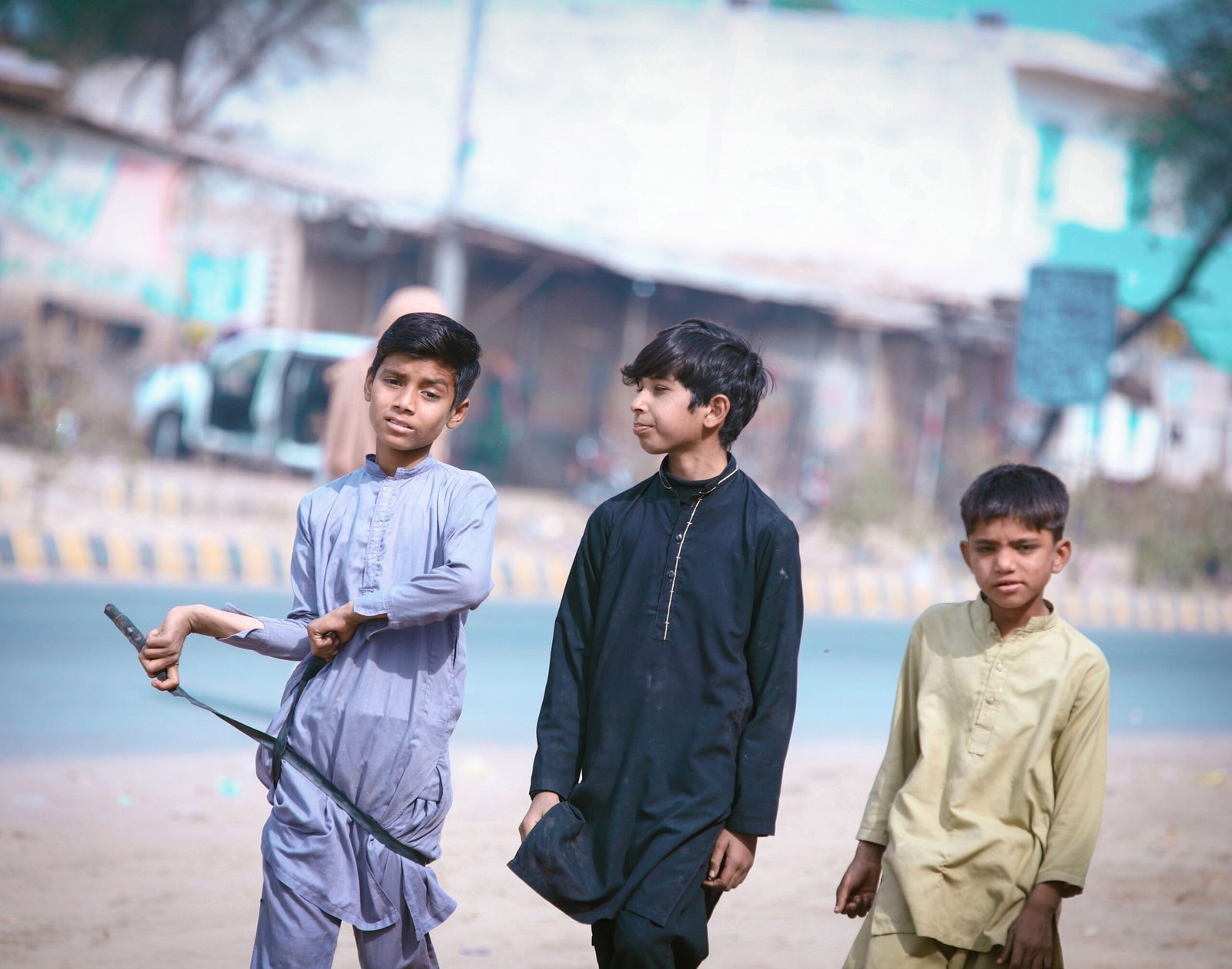
Pakistan is home to one of the world’s largest youth populations, with over 67% of citizens under 30, while around 26% fall into the 15 to 29 age group (PBS). Few nations in the world would carry a youth bulge of this scale. On paper, this demographic dividend should be an advantage for growth, innovation, and increased prosperity. Nevertheless, demographics are not fate. Yet the same numbers that promote prosperity can also easily become a burden on the populace, particularly without jobs, skills, and productivity.
However, economists view this demographic dividend as a rare window in which a country has more workers than dependents and greater potential than ever to grow. But potential is not a guarantee. The real question is not how many young people Pakistan has. It is whether the country is ready for them.
The Promise: A Nation Built on Youth
A Demographic Advantage
There is a reason why economists are excited about numbers like these. The Pakistan Bureau of Statistics reports that around 57% of Pakistan’s population falls within the working-age group. This figure indicates the country’s demographic potential for economic growth. Pakistan has plenty of young people to power the economy, which it needs to drive decades of economic growth. Enough hands to run the factories, enough minds to start businesses, and enough consumers to drive demand. Nations that got this right turned their youth bulge into decades of prosperity by having more producers than dependents. This demographic dividend presents an unprecedented opportunity to make the nation prosperous. Pakistan has the same raw material sitting right in front of it. The real question is whether the country will make good use of this potential or let it go to waste.
The Digital and Freelance Frontier
Over the last few years, something has started to change among Pakistan’s youth. They have begun building their own career instead of waiting for factory jobs and corporate openings that never seem to arrive. They have started coding for clients, freelancing on global platforms, creating content, and offering digital services to people they may never meet in person. According to the State Bank of Pakistan, Pakistan’s freelance earnings reached US$985 million in FY2025, almost three times the level from three years earlier. The Labor Force Survey 2024-2025 reported that 2.9% of freelance workers relied on gig work as their primary source, while 10.6% engaged in it as a secondary activity. It also found that IT services reached US$3.8 billion, growing by 18.3% in FY2024-25. It is still a small slice of the overall picture, but it offers something important: giving this generation half a chance, then they find their way. The formal economy has not provided much room for them, so they are making room for themselves.
A Narrowing Window of Opportunity
However, a demographic dividend is not a permanent situation. It is a window of opportunity that will not last forever. Economists estimate that Pakistan’s demographic dividend window will end around 2045, but the slower pace of fertility decline has stretched that timeline to roughly 2055. It sounds like Pakistan has more time. But more time also means more young people entering the job market every year, with no assurance that jobs will be available for them. This is not a race that Pakistan is running alone, either; countries like Bangladesh and Vietnam faced similar youth bulges a generation ago and moved early, investing in manufacturing, exports, and education while their workforce advantages were still fresh. They are reaping the rewards of that timely action while Pakistan is still deciding whether to start. The dividend is not a gift that waits patiently. It’s a clock that’s quietly ticking, regardless of whether anyone is watching it or not.
The Reality: Where the Promise is Breaking Down?
The Graduate Paradox
Pakistan produces 445,000 to 800,000 university graduates per year across all higher education tiers. Ask those young graduates in Pakistan about their job search experiences, and you will likely hear some version of the same exhausted answers: it is harder than anyone told them it would be. The PBS Labor Force Survey 2024 to 2025 reported that unemployment among degree holders reached 10.9 percent. This means that 11 out of every 100 people who have a university degree and are part of the workforce are unemployed. PIDE research also highlights the problem of education-job mismatch, finding that 11.3 percent of graduates worked in jobs unrelated to their field of study, while 13.8 percent worked in jobs that were only slightly related. Pakistan’s graduate unemployment indicates a growing gap between education and employment.
Think about those young people who did what they were told would lead to a better future. They stayed in school, earned their degrees, and worked hard to build a career. Yet, after years of education, many still struggle to secure a job that matches their qualifications. This is not a story about laziness or lack of ambition. It is the clearest evidence of a widening skill gap between what universities are producing and what employers actually need.
Jobs That Don’t Exist
Pakistan’s workforce is growing, but employment opportunities are not expanding at the same pace. The number of unemployed people in Pakistan rose from 4.51 million to 5.9 million, increasing the unemployment rate from 6.3% to 7.1%. The problem becomes more serious when a growing working-age population meets limited job opportunities in the formal economy. The latest PBS employment trend report shows that the employment-to-population ratio remained almost unchanged, from 49.9% in 2007-2008 to 50.0% in 2024-2025. This figure suggests that the economy has not been able to create more jobs for the growing population. The situation is also different for men and women. The male employment-to-population ratio declined from 79.1% to 75.5% during this period, while the female ratio increased from 19.9% to 23.5%. Although women’s participation in the workforce has improved, their employment rate is still much lower than men’s.

For many workers, the problem is not simply unemployment. It is the type of work available. When stable formal jobs are difficult to find, people often turn to informal work, temporary employment, self-employment, or low-paid occupations. Others leave the country in search of opportunities. A demographic dividend cannot simply be achieved because a country has a large population of working-age individuals. People need opportunities to use their skills, earn a decent income, and contribute to economic growth.
The Exodus
Perhaps the most honest verdict on Pakistan’s job market is not found in employment statistics; it is found in how many young people choose to leave. According to the Bureau of Emigration and Overseas Employment, 107,733 Pakistanis registered for employment abroad in 2000. The number climbed to 946,571 in 2015, the highest figure in the period, before declining in the following years. It reached 862,625 in 2023 and 727,381 in 2024. In 2025, it reached 762,499; nearly 70 percent of these individuals headed to Saudi Arabia. These are not people giving up on ambitions. They are the people who looked at what was available at home and made a rational decision to build their futures somewhere else. Remittances from these workers keep flowing back, and they matter. But there is something quietly troubling about an economy that relies on exporting the very people it should be employing. A demographic dividend should not look like an exit line at the airport.
Closing the Gap Between Promises and Reality
The Reality
The main issue behind Pakistan’s employment crisis is a growing gap between what people learn and what the job market demands. The country continues to produce graduates faster than it can create jobs they are actually trained for. Every year, two to three million young people enter Pakistan’s labor market, many of them without formal skills training at all. For those who do not pursue vocational education, the system meant to prepare them often falls short. The public technical and vocational education and training (TVET) system is not equipped to provide enough training opportunities that adequately prepare students for employment or self-employment.
Moreover, government spending on education remains far below what is needed for a country with Pakistan’s demographic profile. The official Pakistan Economic Survey 2024-2025 report shows that Pakistan allocated around 0.8% of its GDP to education. This low investment makes it harder to build an education system that can prepare a large and growing young population for the labor market. Young Pakistanis are not failing the job market. The system that prepares them for it is failing them first.
There is also a gender dimension that rarely gets enough attention. Most women in Pakistan still do not have access to paid and formal work. They are held back not by a lack of ability but by social norms that burden them with domestic responsibilities and stigmatize working outside the home. Even the women who work often end up doing double duty, managing a job while still carrying most of the responsibility at home. So many women end up taking long breaks, switching to easier jobs, or simply leaving the workforce altogether. That means half of Pakistan’s youth bulge is not even being counted properly; their potential remains untapped.
The Fix
None of this is unfixable. It requires real effort, not just good intentions. The solution exists. The demands exist. The Talent exists. What we lack is the collective will to stop pointing fingers and start building systems that actually work.
On the skills side, some programs are already working to develop skills. TVET reform initiatives are training tens of thousands of young people in practical, job-ready skills, upgrading old institutions, and building courses around fields that are actually hiring, like tech and digital work. The problem is the scale; these programs need to reach far more people than they currently do, especially given the millions of new young workers entering the labor force every year.
Education itself needs attention, too. Course content must be regularly aligned with industry needs, not just what is easiest to teach. Internships should be an integral part of a degree, not an afterthought. Universities should also consider market demand, and courses should be designed around what companies are actually hiring.
In terms of job creation, Pakistan needs real investment in industries that offer long-term, stable work, rather than relying on informal jobs that pay little and provide no security.
When it comes to women, the fix has to go beyond just offering training or daycare centers. It requires changing how people think about women working, because no amount of skill-building will matter if the environment around them does not change too.
Meanwhile, there is only one place where young Pakistanis are already excelling without much support: the digital and freelance economy. The most effective action the country can take is to stop hindering their progress. This includes providing better internet, easier access to global payments, and treating freelancers as part of the real economy, not just a side hustle.
Pakistan has not lacked the ideas or tools to fix these problems. What is lacking is the urgency to act before the window closes.
A Closing Window
So, is Pakistan’s youth a dividend or an employment crisis? Right now, it is leaning closer to a crisis, not because the potential is missing, but because the country has not caught up to it yet. Millions of young people are ready to work and are eager to build something for themselves. Too many of them remain waiting for jobs that do not exist or pack their bags to go find those jobs somewhere else instead. But this does not have to be the end. The window is still open, just not forever. By 2055, this advantage disappears whether Pakistan acts or not. So really, the choice is clear: either the next few decades are spent building an economy that finally makes room for its youth, or they are spent watching that opportunity slip away, year after year. The clock is still ticking. What happens next is still up to Pakistan.
Author
Malaika Bashir